- Catalog
- Services
- About company
- For customers
- Blog
- Contacts
Language and delivery country
English · United States
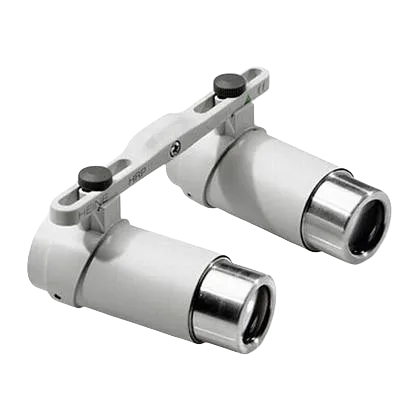
Binocular loupes are used, for example, in dentistry, surgery, dermatology, ENT medicine, and veterinary practice. In combination with headlights, they make it easier for physicians to perform more precise and accurate work, since fine details can be seen thanks to high-quality optics. Loupes and headlights can be worn on spectacle frames or headbands – depending on personal preference.
Depending on the field of application, there are key criteria to consider when selecting the right binocular loupe: magnification, working distance, declination angle, and optical quality. All of these should ensure an ideal view and better ergonomics during work.
The general rule is that the highest magnification is not necessarily the best. Lower magnification makes eye-hand coordination easier. It also makes working with loupes more effective, since lower magnification increases the field of view and depth of field.
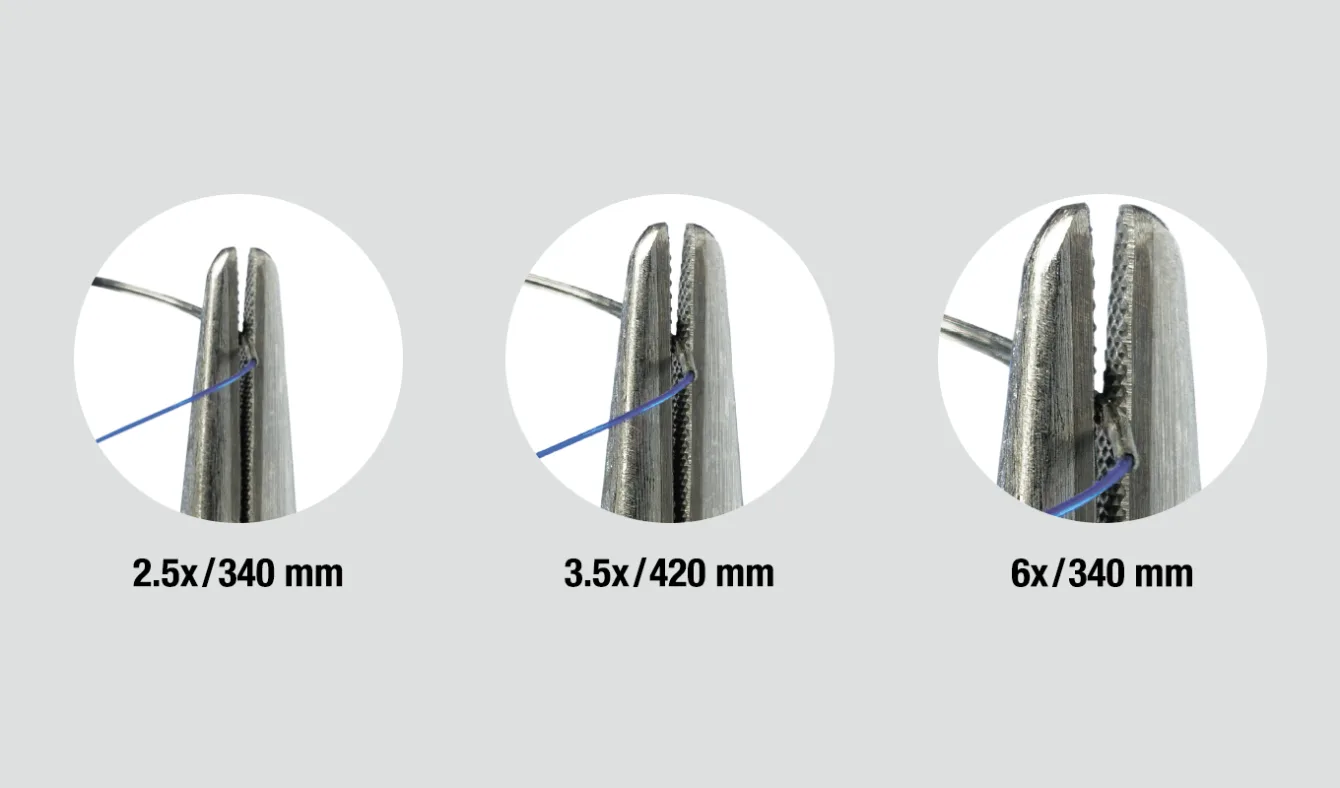
For those who have not used loupes before, it is best to start with 2.5x magnification, as it is easier for beginners to get accustomed to working with magnified images.
Magnifications commonly used for the following medical applications:
| Specialization | Magnification | Application |
|---|---|---|
| ENT | 2.5x | Diagnosis and treatment of ear and nose conditions |
| Surgery | 2.5x, 3.5x, 4.0x | Plastic and reconstructive surgery, transplantation, suturing |
| Ophthalmology | 2.5x | Plastic and reconstructive procedures such as blepharoplasty |
| Dentistry | 2.5x | Restorations, implantology, periodontal surgery, including cleaning |
| Dentistry | 3.5x, 4.0x | Detailed restorations, e.g., preparation of peripheral areas |
| Dentistry | 6x | Endodontics |
| Veterinary medicine | 2.5x | Oral cleaning, urogenital surgery |
“Working distance” refers to the distance from the eyes to the working area at which a sharp image becomes visible. For example, tall people working standing up require a longer working distance than shorter people who examine or treat sitting down. The working distance can easily be measured with a tape measure (distance from the eye to the optimal working zone).
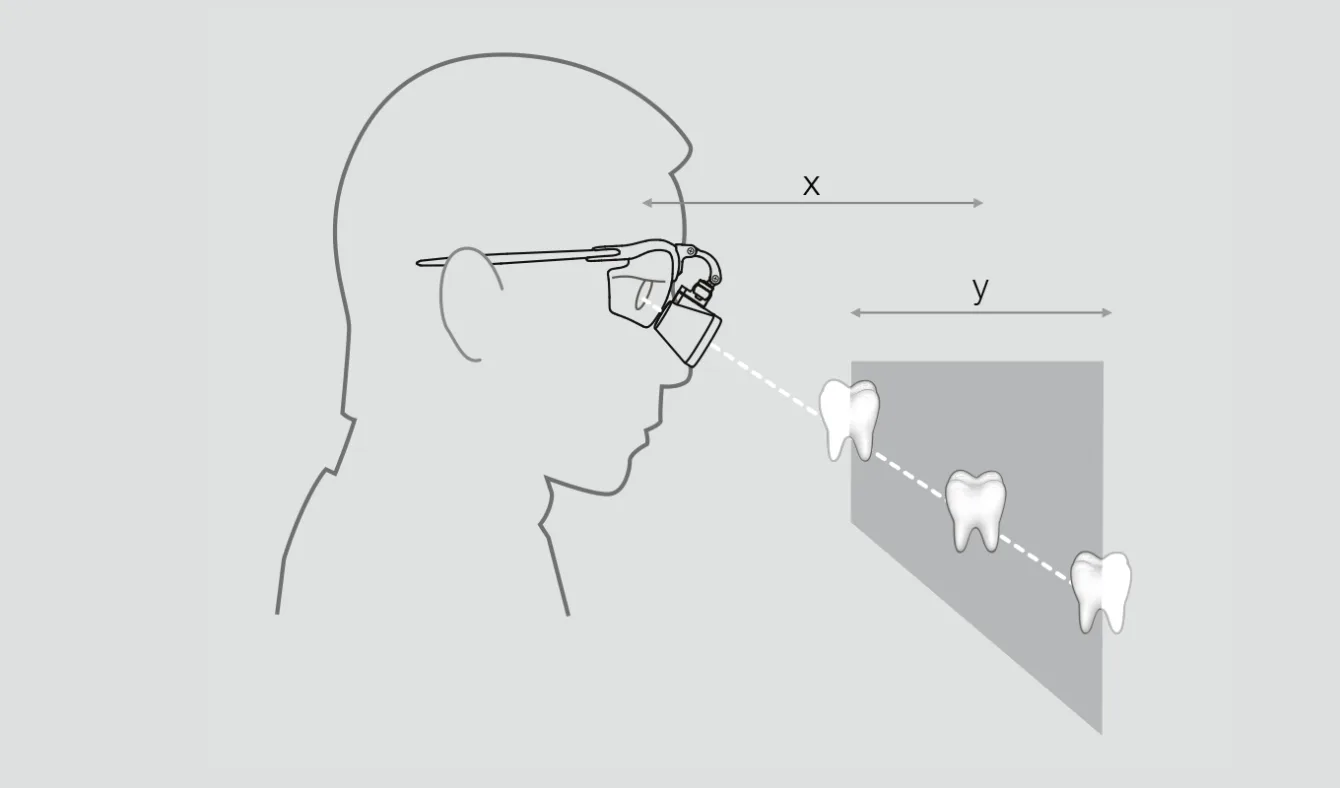 Working distance with HEINE binocular loupes: 340, 420, and 520 mm
This parameter indicates how much the optics can be angled when worn. At the ideal declination angle, the user maintains an upright, relaxed neck and back posture, allowing fatigue-free work. The declination angle depends on the user’s height and working position (sitting or standing).
Some suppliers offer loupes with adjustable declination angles. It is important that the angle can be adjusted sufficiently, as with HEINE loupes.
Ergonomically correct posture is achieved by ideally adapting the working distance and declination angle to the user. And good posture is the best prevention against back and neck pain.
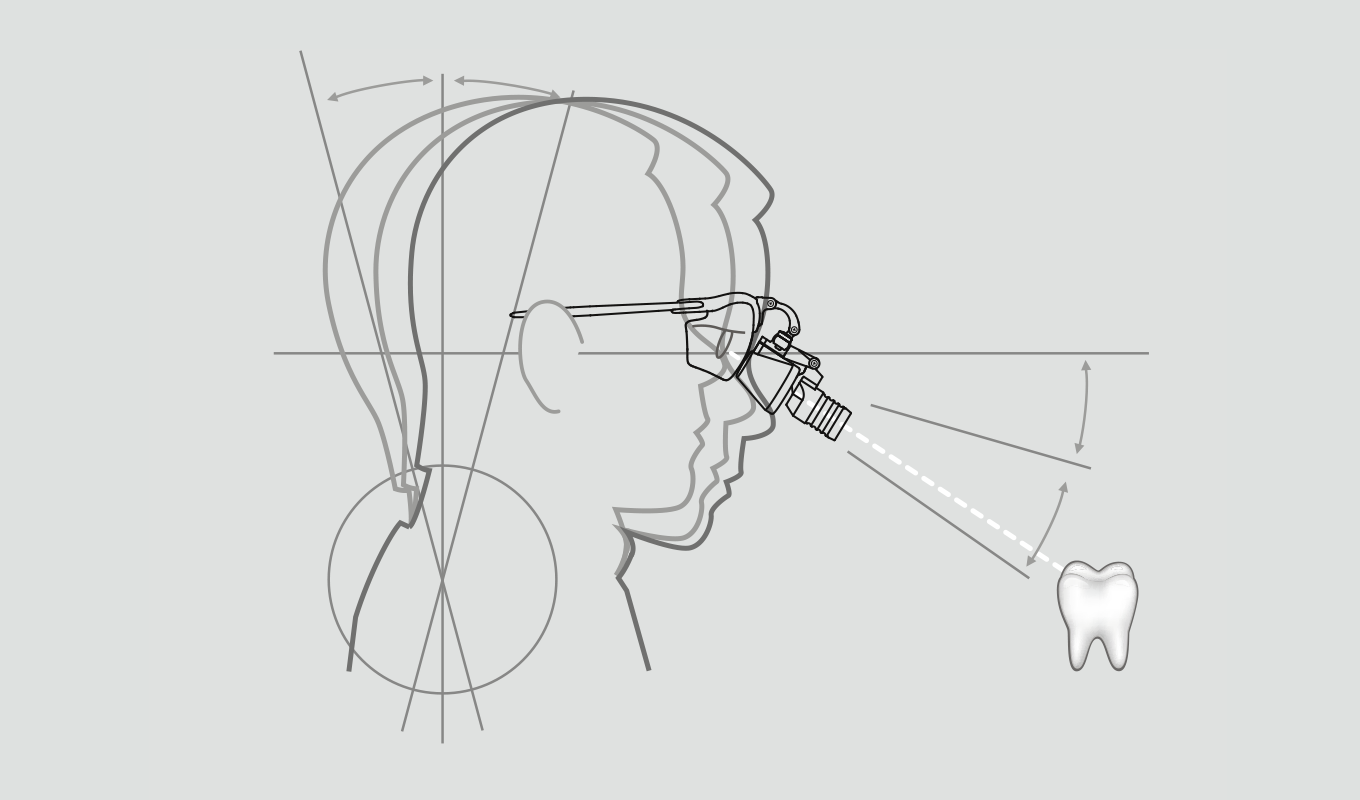
Some manufacturers offer TTL (Through-the-Lens) loupes, in which the optics are built into the lenses. These must be precisely customized for the user at the time of purchase. Since they are manufactured according to the user’s interpupillary distance, they usually cannot be used by others. Binocular loupes such as HEINE HR and HRP allow for individual adjustment of interpupillary distance and can therefore be used by different users.
can be viewed here
Just as you always adjust your chair settings, the declination angle of the loupes can also be adjusted. This way, you always work in an optimal posture, regardless of the procedure. Unlike rigid TTL loupes, HEINE loupes are flexible and do not limit you to one working position.
can be viewed here
Pay attention to optical quality. Among other things, it allows sharp magnification without unwanted color fringes at the edges of the field of view (rainbow effect).
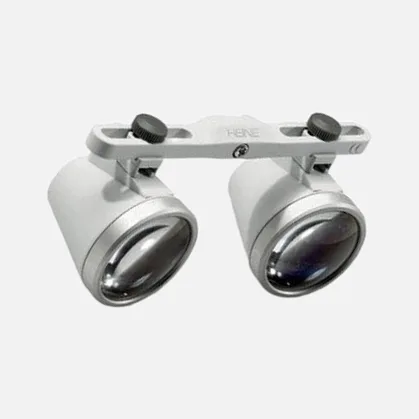 HEINE HR. High-resolution achromatic optics with excellent optical performance.
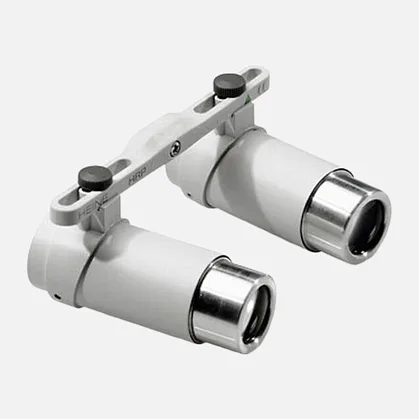 HEINE HRP. High-resolution prismatic optics with excellent optical performance for 3.5x magnification and above.
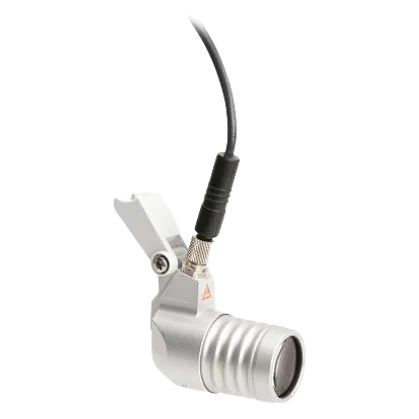
If existing lighting is insufficient, it is recommended to combine loupes with a headlight. When choosing a binocular loupe, the most important factors are light quality and the alignment of the light source relative to the loupe.
The headlight should be aligned coaxially with the loupe, i.e., the light source and the loupe should share the same axis in the viewing direction. This ensures that the headlight optimally illuminates the field of view without shadows.
In HEINE loupes, for example, the illumination axis can be individually adjusted relative to the visual axis – for perfect alignment according to personal preference.
High-quality LEDs provide near-natural color rendering similar to daylight. However, cheap LEDs are often used, with an overly high blue component in the spectrum, distorting the natural impression of color. For precise work, bright illumination of the field of view is essential, meaning the entire light cone must be evenly bright (homogeneous) and shadow-free to the very edge. The decisive factor here is the quality of illumination, not the number of lux.
HEINE devices are equipped with LEDHQ – delivering an exceptionally high color rendering index in the field of view.
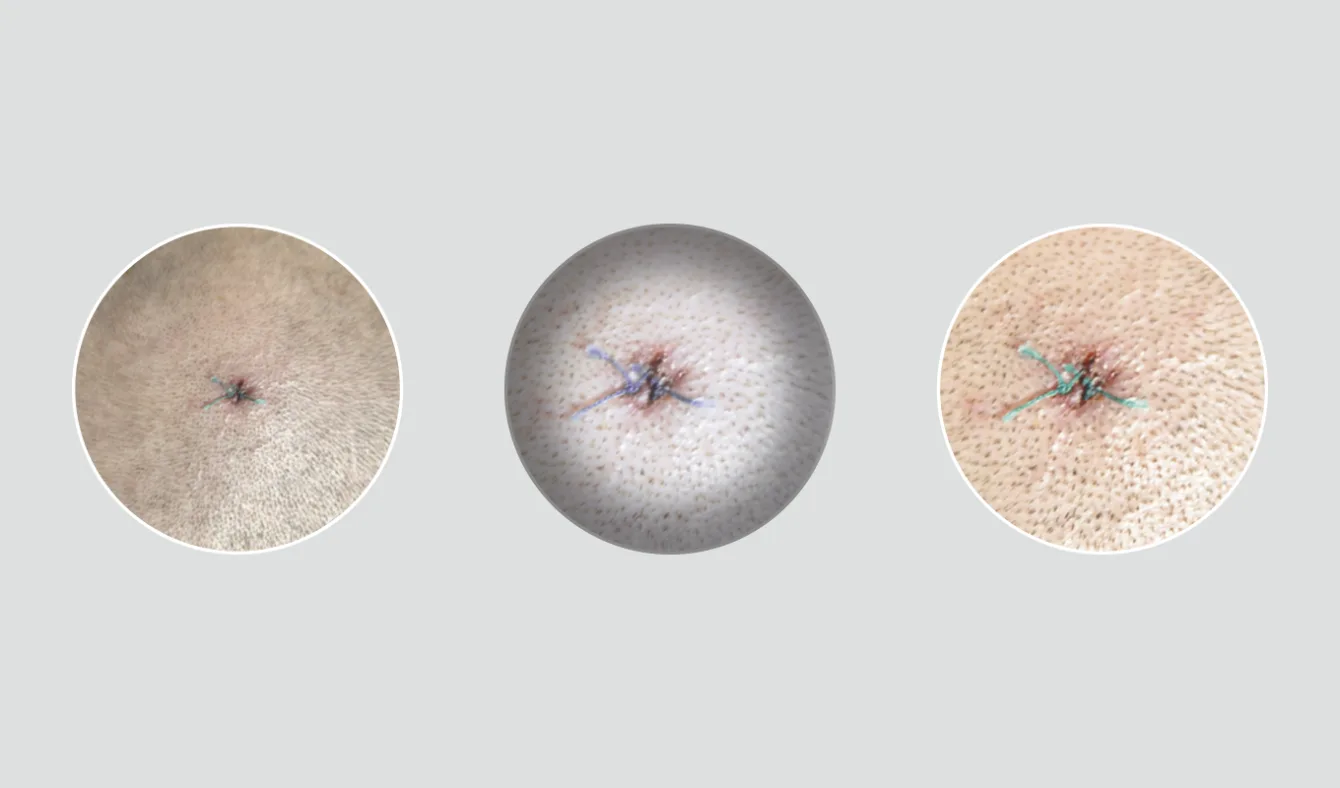
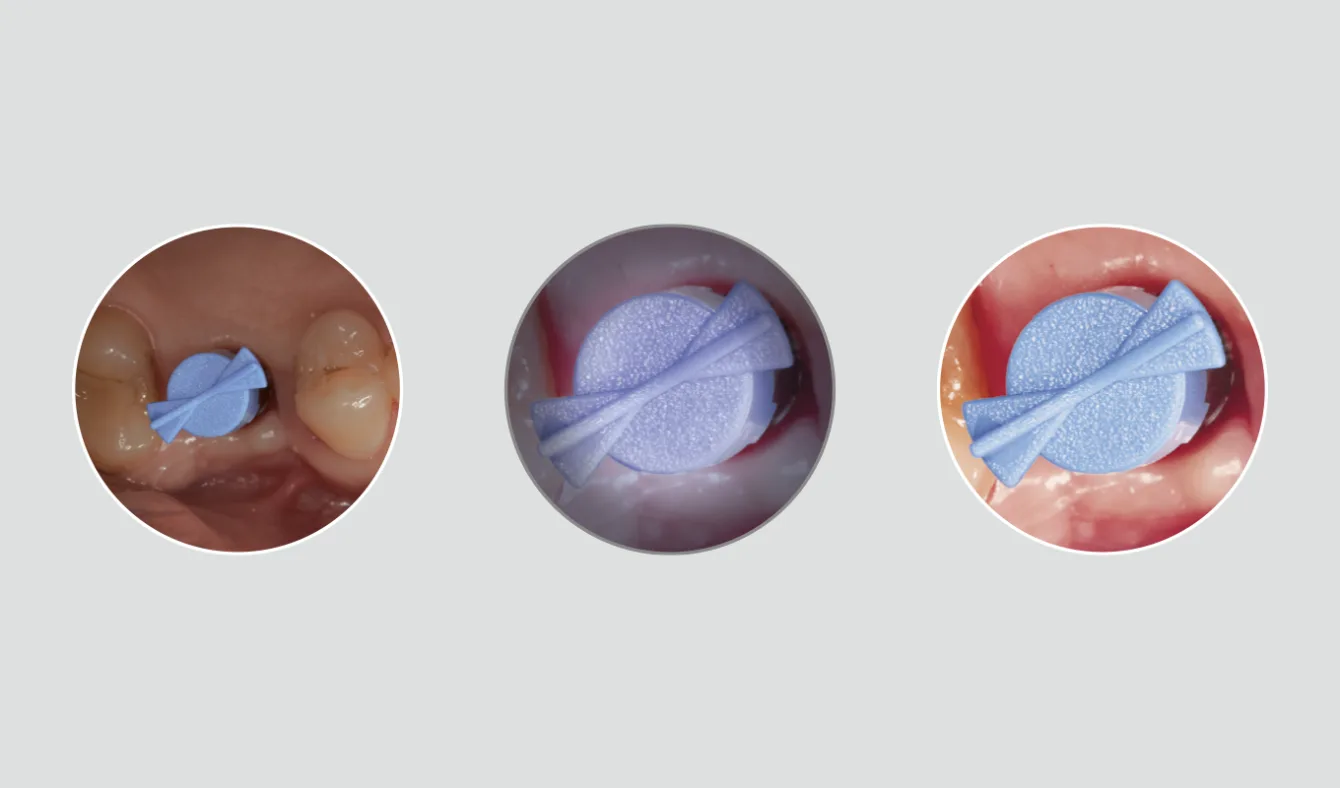 Left to right: without light and magnification, with a competitor’s comparable product (with light and magnification), with HEINE 2.5x binocular loupes and LoupeLight2 headlight.
For loupes with a light source mounted on spectacle frames, the power supply is often a rechargeable battery connected via cable. Compact, lightweight batteries can be conveniently worn on a belt or in a coat pocket, providing unrestricted freedom of movement. Practical for everyday use: a reliable charge level indicator and smooth brightness adjustment for optimal control of light intensity. And of course, the battery should be easy to clean.
For headlight and binocular loupe combinations on a headband, there is a wider choice of power sources. Depending on personal preference and frequency of use, you can choose a wired power supply, belt- or pocket-worn battery packs, or wireless solutions with an integrated headband battery.
A wired transformer is more economical, but a rechargeable solution provides greater flexibility and comfort, while a wireless option ensures 100% freedom of movement.
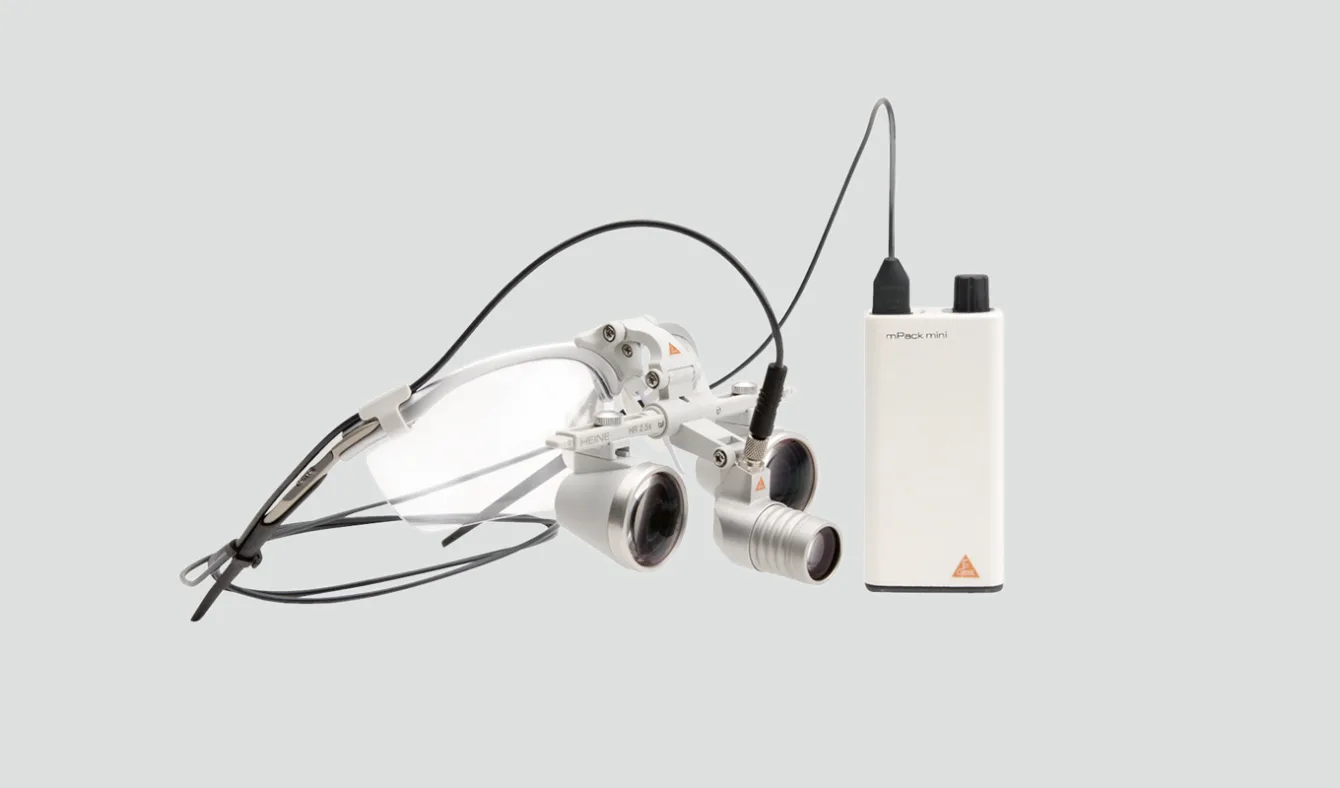 Small, lightweight, and equipped with a durable cable. The HEINE mPack mini offers up to 9 hours of operating time.
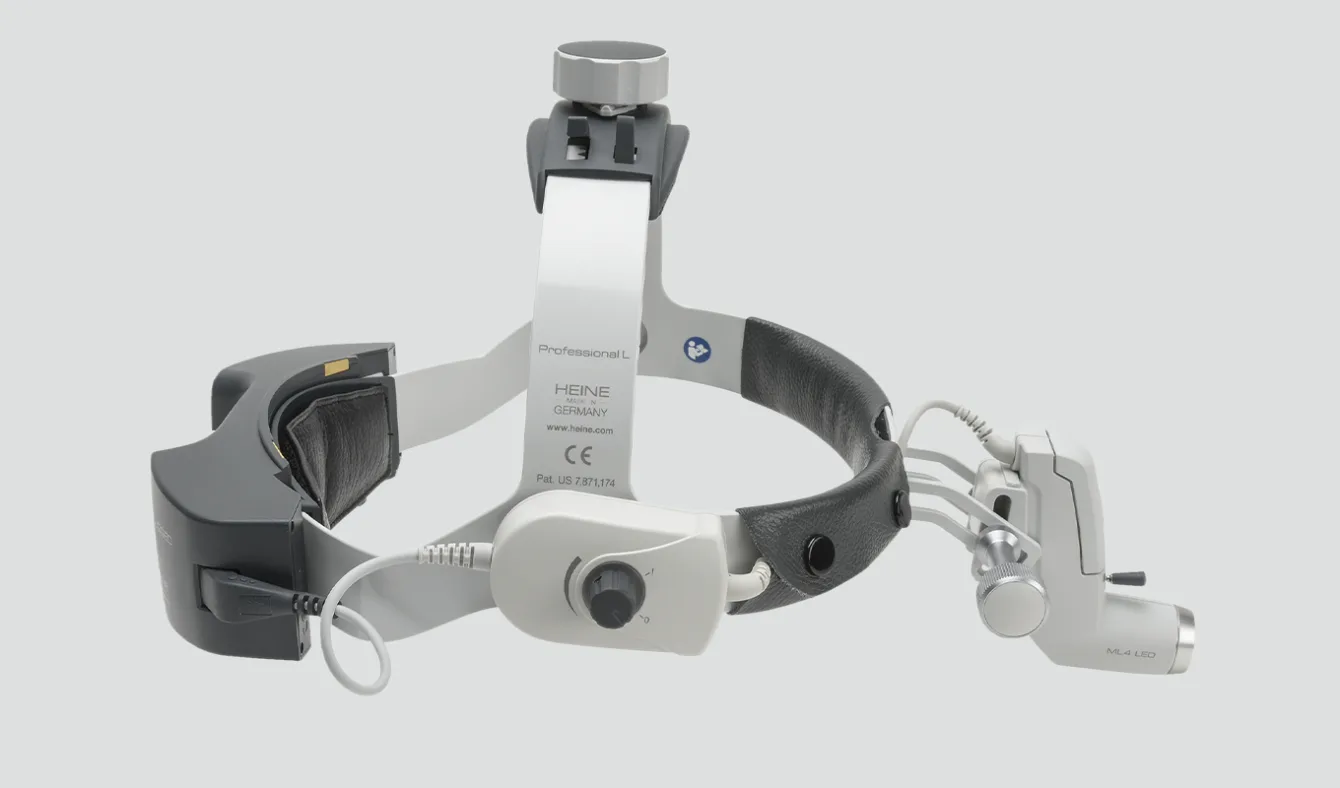 100% freedom of movement and high comfort. ML4 LED with mPack UNPLUGGED features stepless brightness control and charge level indicator.
a) Spectacle frame (S-FRAME)
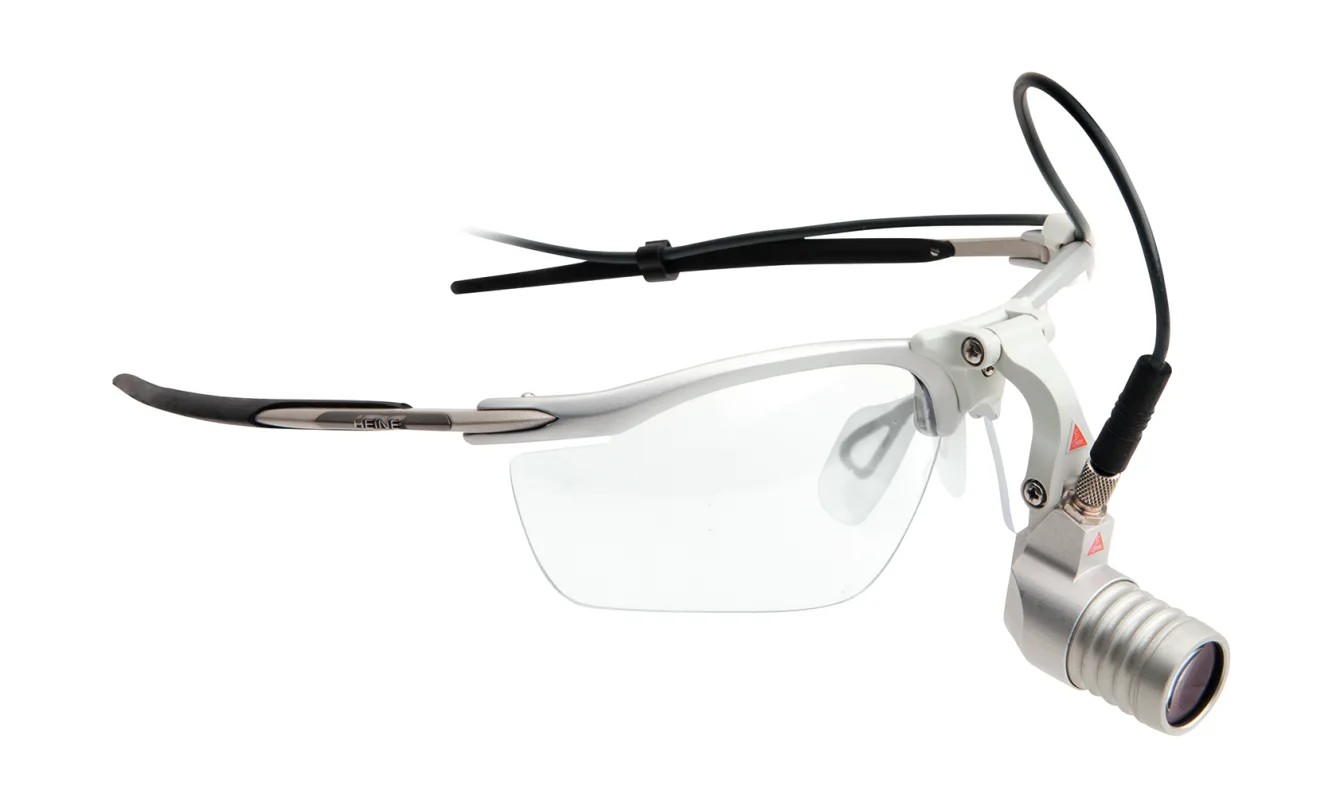
A lightweight spectacle frame combined with a headlight is suitable for most applications. The spectacle frame can be quickly put on and taken off as needed. However, it is important that the frame sits comfortably and does not slip during work. The HEINE LoupeLight2 S-FRAME, for example, features soft nose pads shaped to fit the user’s nose, with a wide contact area for better weight distribution. A retaining strap attached to the temples further distributes the weight and ensures a comfortable, secure fit.
Practical with the HEINE LoupeLight2: thanks to the “flip-up” function, the loupe can be tilted up while the headlight remains in place. This allows the user to conveniently switch between magnified and normal vision while always having optimal illumination.
And what if the user has impaired vision? – For some models, such as the HEINE S-FRAME, an additional “clip-in” frame for corrective lenses is available.
b) Headband
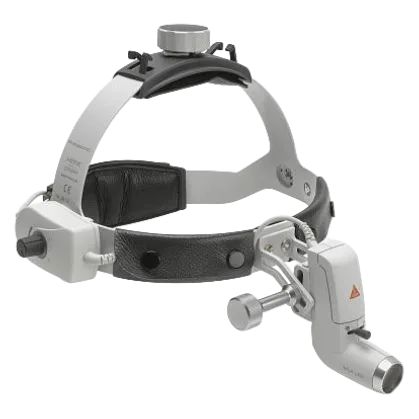
Binocular loupes mounted on a headband are suitable for longer procedures or interventions. Attention should be paid to a good fit, circumference and height adjustment, and comfortable padding. A secure and comfortable fit allows for concentrated work without the headband slipping.
Do you wear glasses? – When using a headband, you can still wear your own glasses.
The wearing comfort of the headband is especially noteworthy, as it provides excellent fit and padding compared to other manufacturers. Adjustment is also very convenient, as is the very low weight.
Dr. med. Timm Schmidt-Mertens, hand surgeon at St. Marien-Hospital, Hamm, on HEINE HR loupes with headband combined with the HEINE ML4 LED headlight.
It makes sense to configure a binocular loupe to fully match your needs, paying attention to optical quality and high-quality workmanship. Precise adjustment has a major impact on treatment outcomes and user comfort. Thanks to HEINE’s modular concept, you can configure your binocular loupe to meet your specific requirements.
Find your ideal combination in just four steps
Clip-in corrective frame
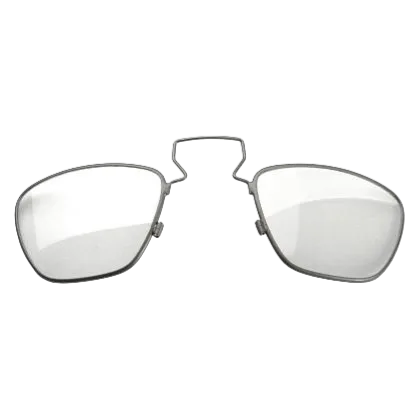
Many manufacturers allow the use of corrective lenses, usually with clip-in frames. With slight vision impairments of ±1 diopter, they may not be necessary, since the user’s vision can be compensated by slightly adjusting the working distance. However, in cases of significant vision impairment, corrective lenses are recommended.
Sterilizable flip levers
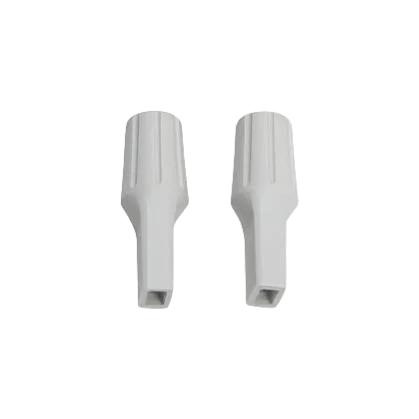
Some loupes can be flipped up without removing the entire frame or headband. This allows quick switching between magnification and normal vision, for example, when interacting with a patient. Sterilizable flip levers are detachable and ensure that the user does not need to touch the loupe during a procedure.
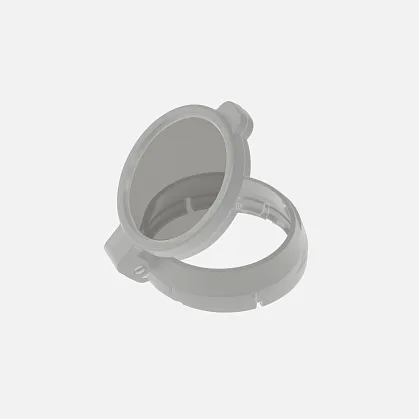
Polarization filters reduce reflections. They are available as an option for some loupes and headlights. Polarization filters increase contrast and minimize reflections. They also improve vein visualization, as the upper skin layers become more visible.
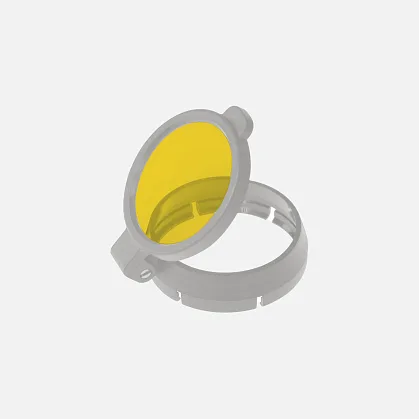
Yellow filter reduces the blue light component. In dentistry, the yellow filter can be used to prevent premature curing of composite materials.
Retaining strap for frames
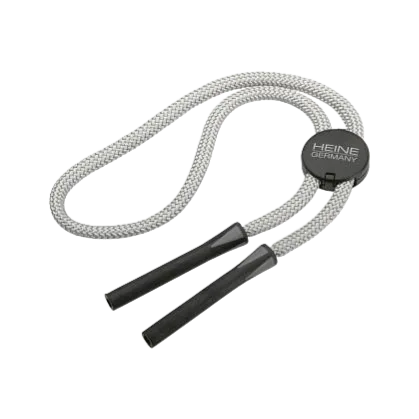
A retaining strap that attaches to the spectacle temples and tightens behind the head helps better distribute weight and ensure a more secure and comfortable fit.
All accessories are already grouped in the catalog under each headlight model for your convenience: HEINE ML4 LED, HEINE MicroLight2, and HEINE LoupeLight2.
TTT HealthCare, HEINE’s primary partner in the countries of the former Soviet Union, organised a two-day educational programme at the HEINE Optotechnik manufacturing facility in Gilching (Munich, Germ
The catalog on the website has already been updated.
The catalog on the website has already been updated.
Product successfully added to cart
Go to cart