
- Catalog
- Services
- About company
- For customers
- Blog
- Contacts
Language and delivery country
English · United States
The dermatoscope is considered the dermatologist’s primary tool and an indispensable instrument for reliable evaluation of both pigmented and non-pigmented skin lesions - such as nevi and melanomas in the context of skin cancer screening. However, it can also be used to diagnose other dermatological conditions, including verrucae, hypertrophied sebaceous glands, and scabies mite infestation.
Nevertheless, not all suspicious areas are easily accessible for standard contact dermoscopy. In areas between the fingers and toes, in the auricle, in the corners of the eyes, and on the nasal wings, it is often difficult for the physician to bring the dermatoscope close enough for adequate examination.
The solution - the small contact plate
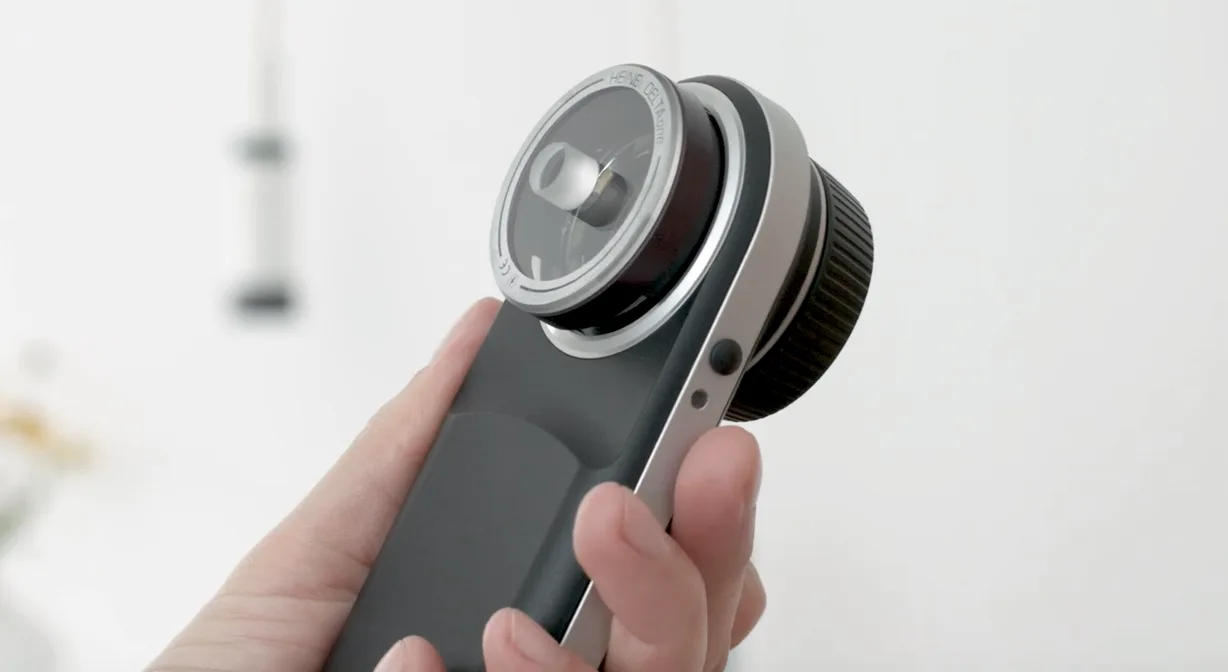
For such cases, the small contact plate is optimal, available, for example, for the HEINE DELTAone and DELTA 30 dermatoscopes. The narrow attachment fits well against concave areas of the body, enabling dermatoscopy even in hard-to-reach zones.
This is especially relevant for lesions between the toes, which are nearly impossible to examine with a standard dermatoscope in contact mode. Yet these zones often show pigmented lesions, such as nevi, requiring differential evaluation. Common warts (verrucae vulgares) also occur here, particularly in spiky (thorny) or deep plantar forms. With the small contact plate, they can be effectively distinguished from foreign bodies, calluses (clavi), or hardened skin.
Detailed examination of exposed areas of the face - for example, the nasal wings, behind the ears, in the auricle, and in the external auditory canal - is also greatly facilitated by the use of a small dermatoscopic contact plate.
It is precisely in these sun-damaged areas of skin that dermatologists often detect basal cell carcinoma or precancerous conditions such as actinic keratoses, which are considered forms of precursors of non-melanoma skin cancer.
Purely cosmetic skin changes also often appear in these areas, such as:
They frequently occur on the forehead, in the central part of the face, in the inner corner of the eye, on the eyelids, or in the nasal region. In these anatomically complex areas, the small dermatoscope contact plate proves extremely useful - especially since such changes can clinically resemble basal cell carcinoma, which also commonly develops on the nasal wings or in the inner corner of the eye.
Itchy red papules, vesicles, and scratch marks may indicate infestation with scabies mites. These microscopic arachnids tunnel under the skin in curved burrows 0.5 to 2 mm wide and are most often localized in the interdigital spaces and around the navel.
For reliable diagnosis, the small contact plate is used together with immersion fluid in direct skin contact. This approach allows clear differentiation of scabies mite infestation from other skin diseases - such as eczema in atopic dermatitis (neurodermatitis).
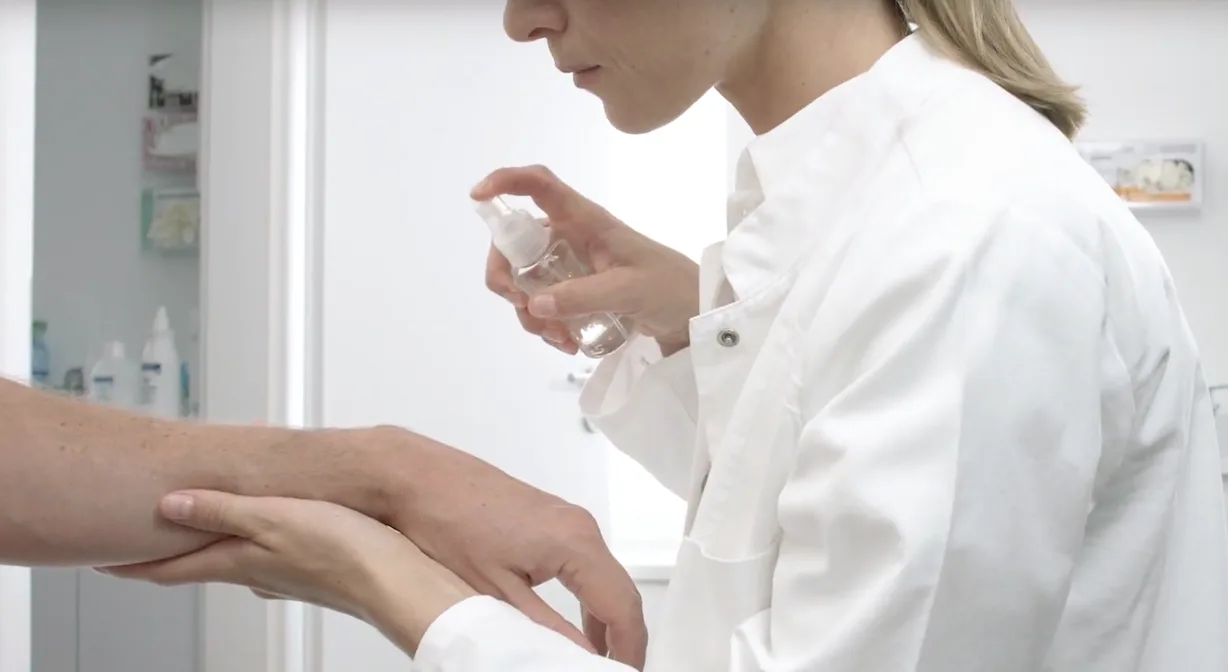
Especially in non-polarized examination mode, the use of immersion fluid is recommended. It ensures better transmission of light from the dermatoscope across the skin surface and makes deeper skin structures more visible.
Immersion fluid evens out irregularities between the skin and the contact plate, creating a smoother image without interfering air bubbles. This is particularly important when using the small contact plate, since even a small air bubble can significantly affect image quality and make diagnosis more difficult.
can be viewed here
Some dermatoscope manufacturers offer small contact plates as an optional accessory. HEINE Optotechnik, for example, has developed such a plate specifically for its high-precision dermatoscopes DELTA 30 and DELTAone. The diameter of the small contact plate is only 8 mm. It can be quickly and easily swapped with the standard optics using a simple twist-and-lock movement.
TTT HealthCare, HEINE’s primary partner in the countries of the former Soviet Union, organised a two-day educational programme at the HEINE Optotechnik manufacturing facility in Gilching (Munich, Germ
The catalog on the website has already been updated.
The catalog on the website has already been updated.
Product successfully added to cart
Go to cart